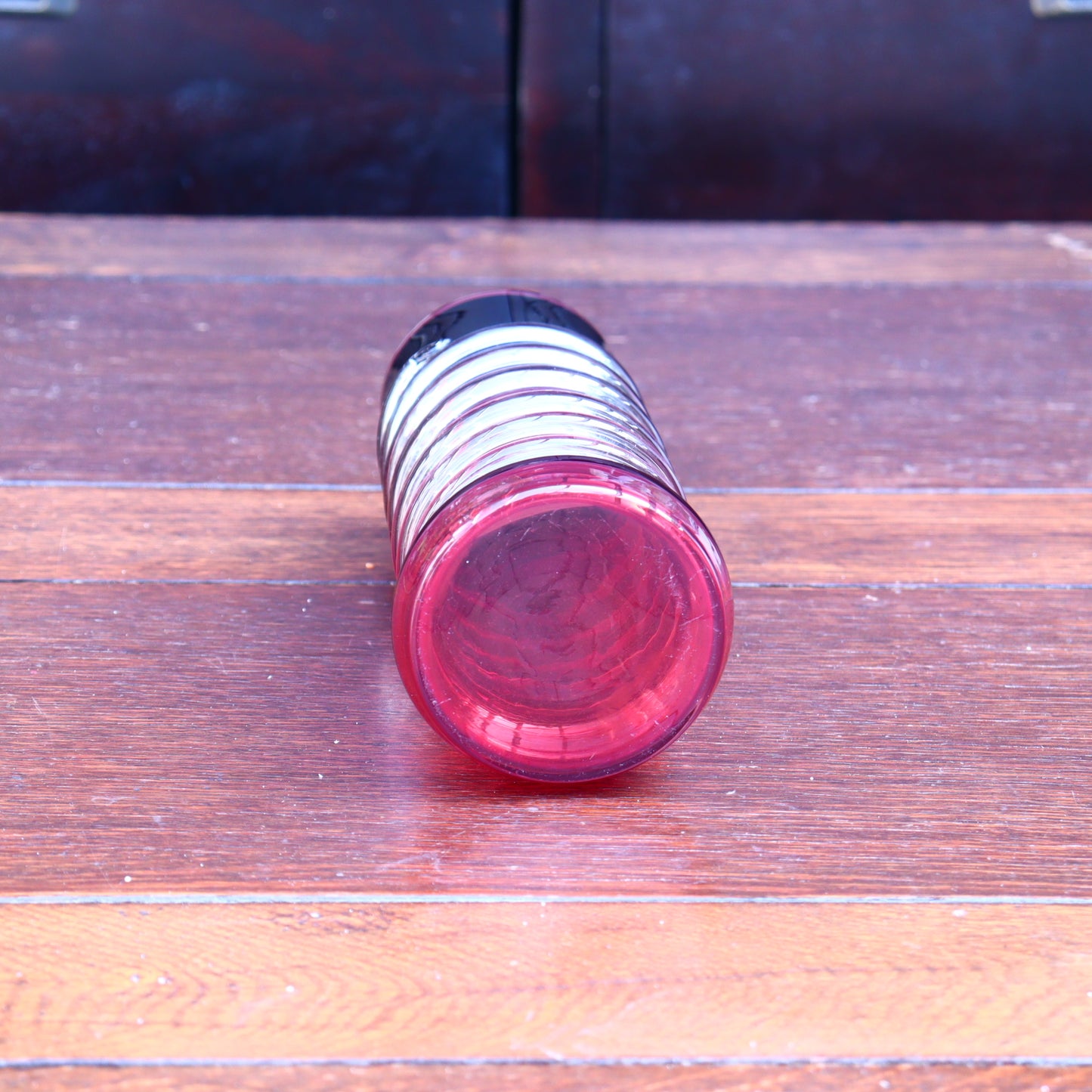
Vintage Mid Century Modern Ruby Red and Black Art Glass Spiral Vase
Vintage Mid Century Modern Ruby Red and Black Art Glass Spiral Vase
Couldn't load pickup availability
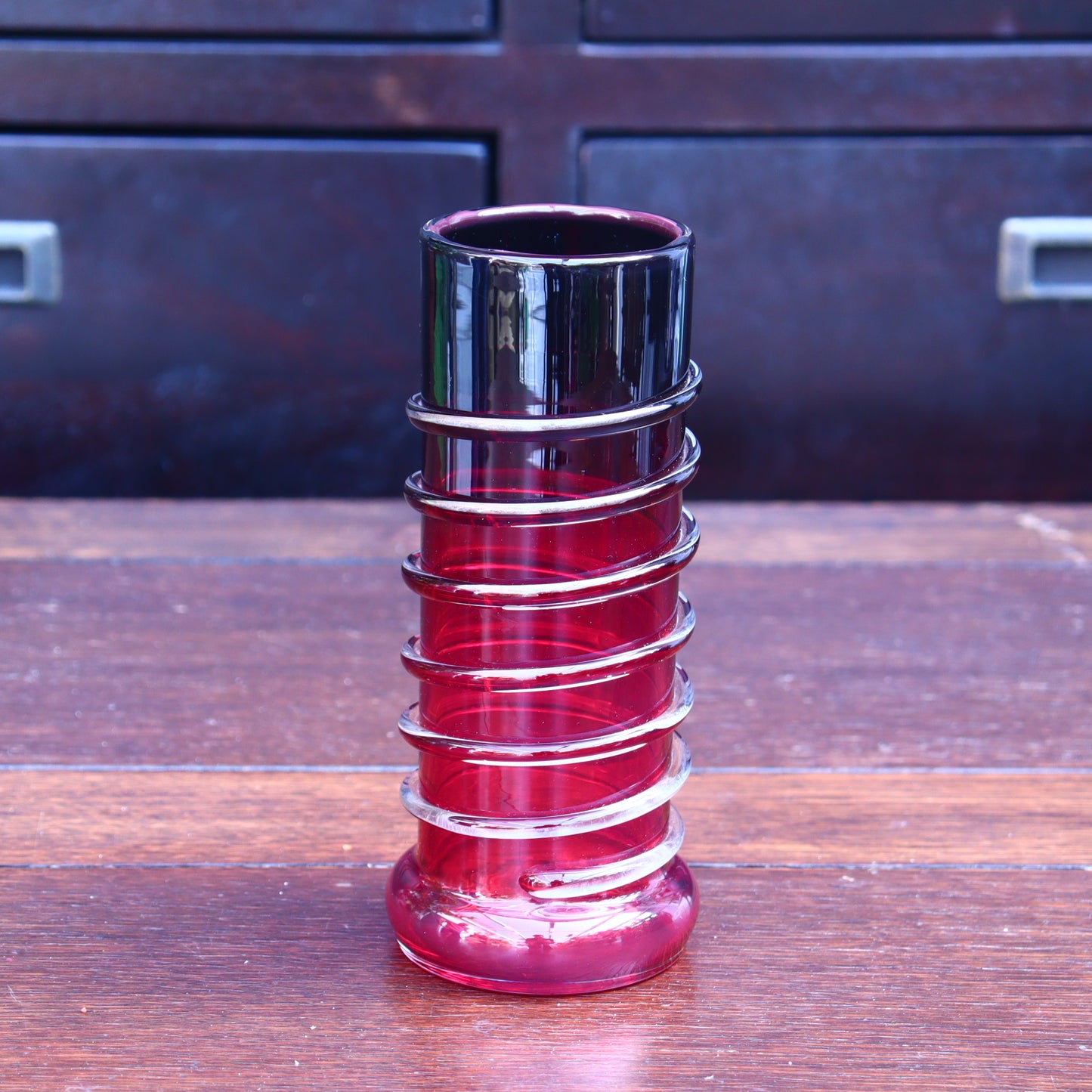
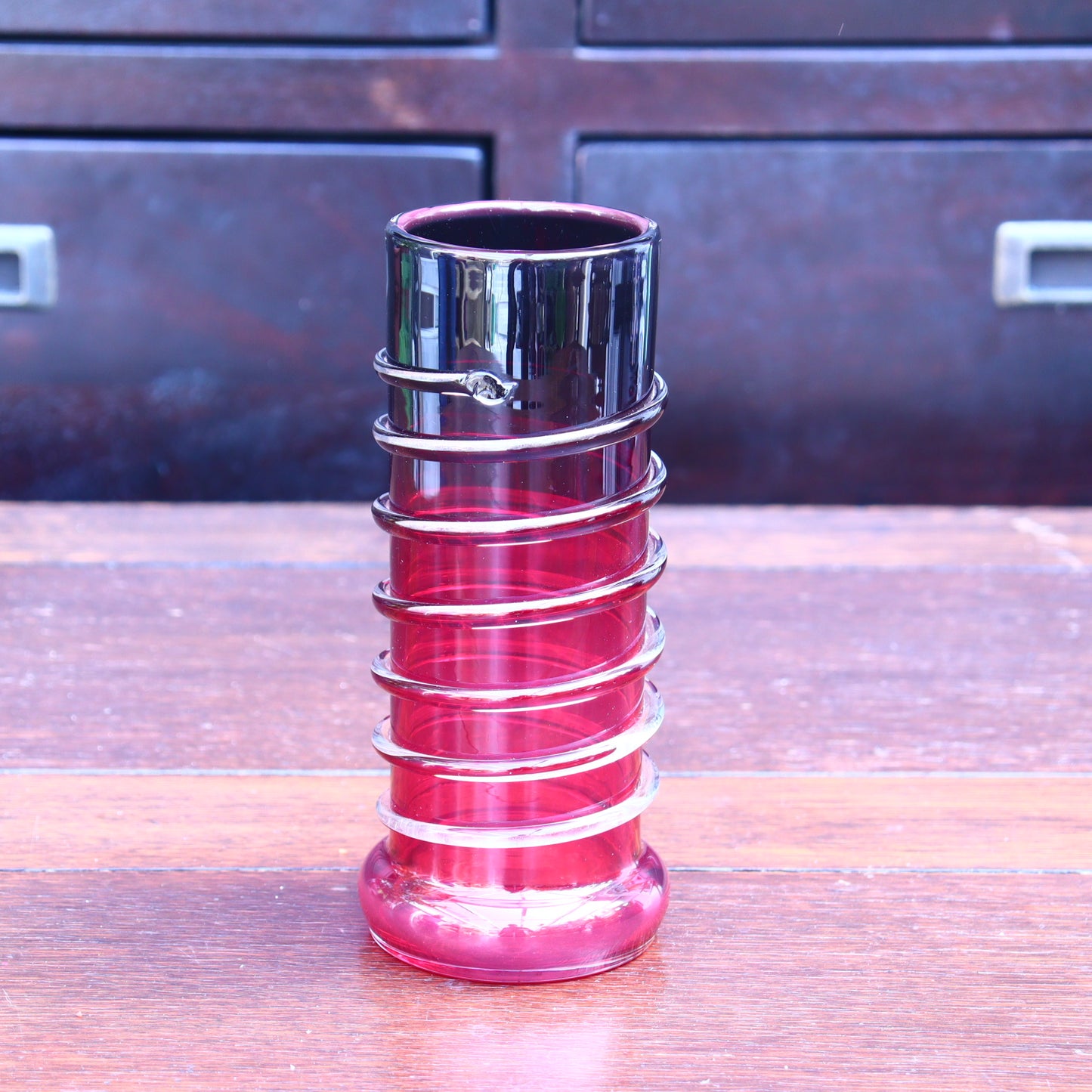
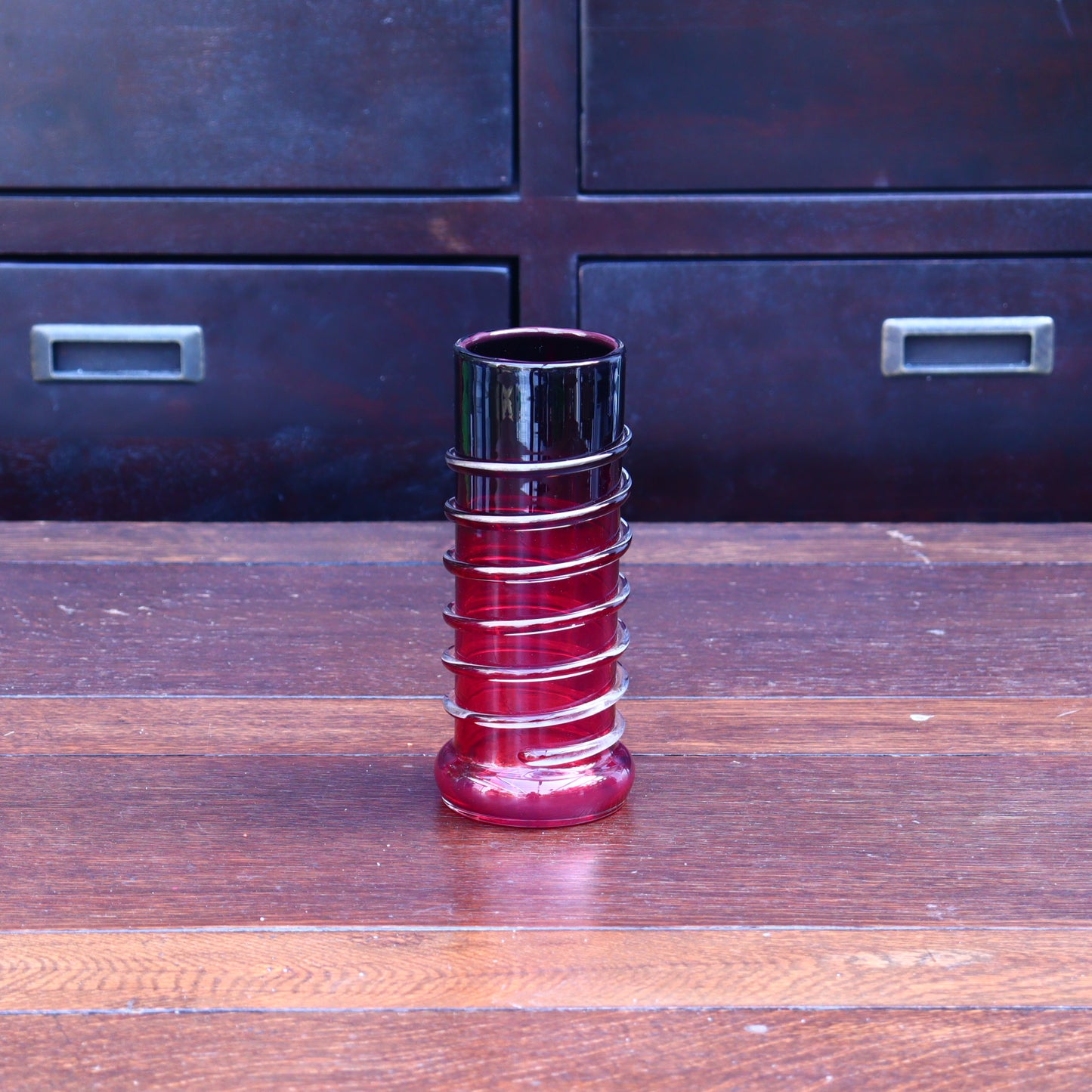
This vintage art glass vase is a striking exemplar of Polish postwar design, created in the 1970s by renowned glass artist Jerzy Słuczan-Orkusz and produced at the Tarnowiec Glassworks. Compact in scale yet rich in expression, the cylinder-shaped piece features a vibrant ruby red hue that gracefully transitions into deep black towards the rim, creating a dramatic gradient effect that plays beautifully with light. The bold color palette is masterfully contrasted by a delicate transparent glass spiral coil wrapped horizontally around the body, applied by hand with exceptional decorative flair.
Hand-formed in sodium glass with colored mass, this vase reflects the experimental spirit and craftsmanship that defined the regional glass design movement of the 1960s and 1970s. Słuczan-Orkusz, known for blending sculptural form with modernist simplicity, brought a sense of individuality and dynamism to utilitarian objects. Elegant yet expressive, this unsigned piece serves equally well as a functional flower vase or a standalone mid-century modern decorative object. It remains in very good vintage condition, entirely free of chips, cracks, or restorations.
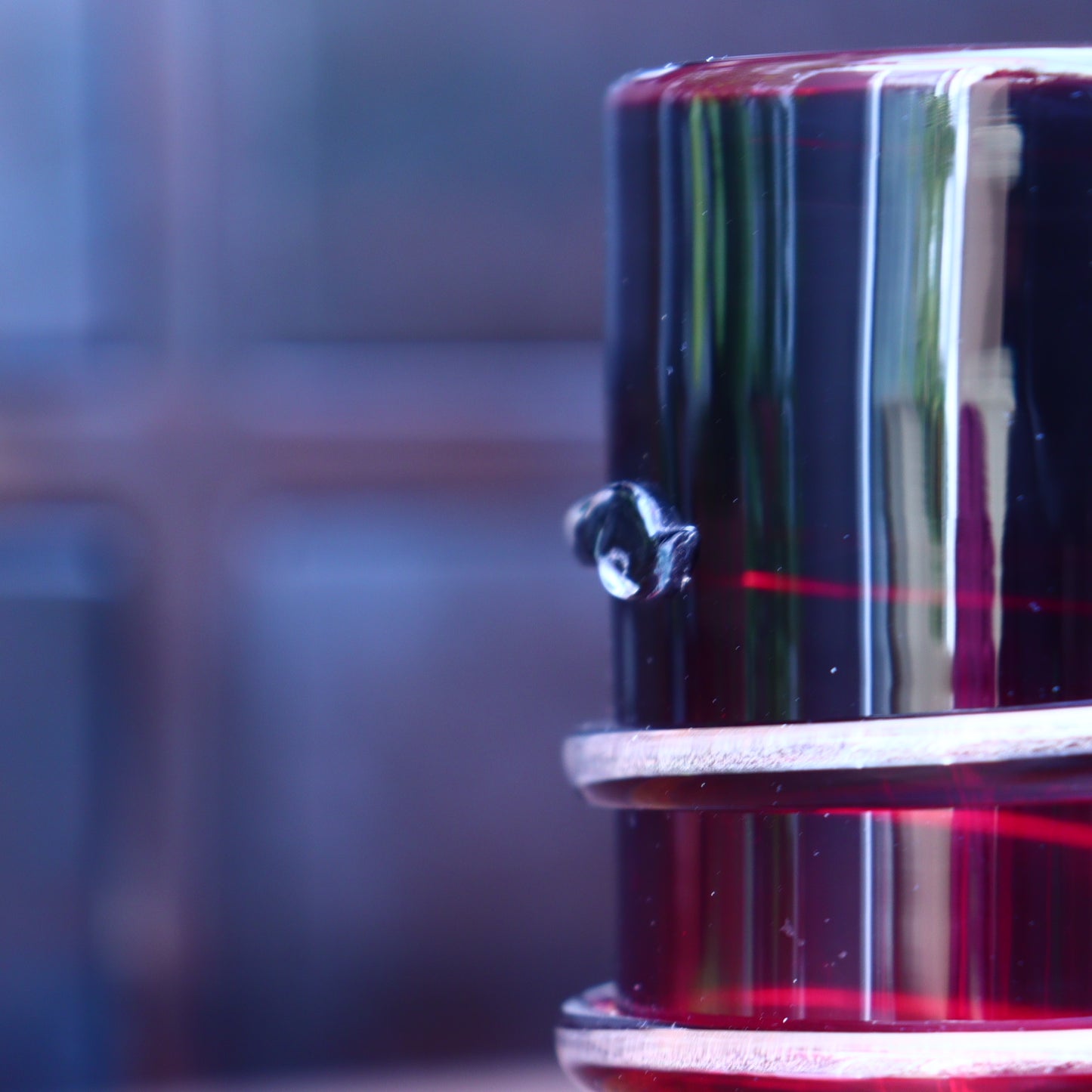
Please review all photos carefully, as they are an integral part of the description.
Product details
- Dimensions: Height 7 1/2" × Diameter 3 1/8"
- Technique: Hand-Formed Sodium Glass, Colored Mass, Applied Clear Glass Spiral
- Origin: Poland (Tarnowiec Glassworks)
- Date: 1970s
- Signature: Unsigned
- Condition: Very good vintage condition; no cracks or chips. Minimal base shelf wear consistent with age.
The Tarnowiec Glassworks was one of the notable postwar glass manufactories active during the mid-to-late 20th century, becoming famous for its hand-formed artistic glass that combined functionality with a strong visual identity. Jerzy Słuczan-Orkusz (1924–2002), educated at the Academy of Fine Arts in Kraków, helped define the aesthetic of regional decorative arts. His collaboration with the Tarnowiec workshop yielded some of his most recognized designs, marked by the use of rich colored glass mass and hand-applied structural glass overlays. Today, these creations are highly sought after by collectors of Eastern European mid-century modern design and serve as a testament to postwar applied arts creativity.