Hand-painted Majolica Plate with Floral Motif
Hand-painted Majolica Plate with Floral Motif
Couldn't load pickup availability
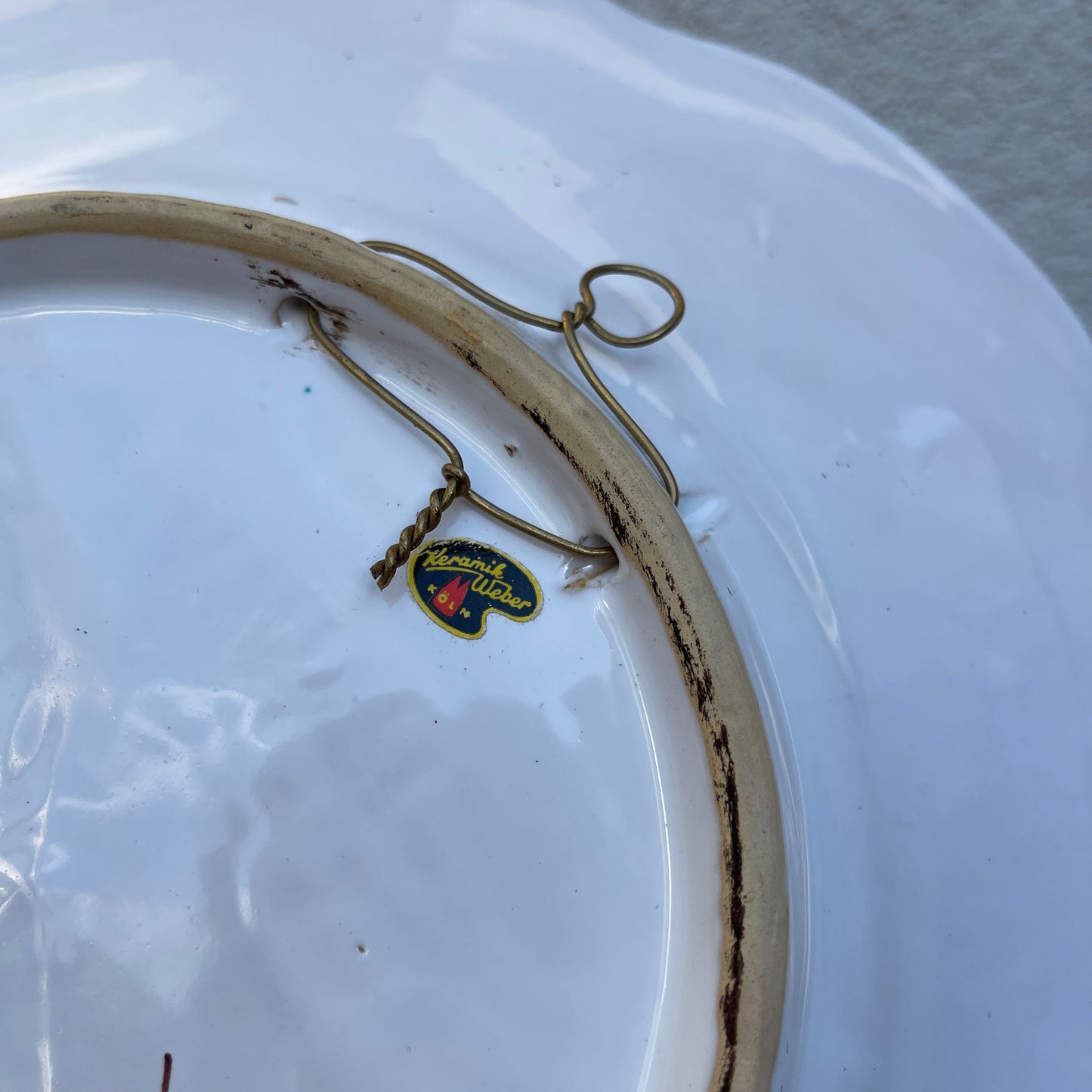
This beautifully hand-painted majolica plate features a vibrant floral design in bold shades of yellow, red, green, and blue. Its scalloped edge and richly detailed decoration reflect the artistry of traditional European ceramics. Produced in the second half of the 20th century by Keramik Weber Köln, this decorative plate remains in very good vintage condition with no cracks or chips, making it a striking centerpiece or wall display. The back is marked with the factory’s sticker and production marks, confirming its authenticity.
Product details:
- Overall dimensions: Diameter 12 1/4", Height 2"
- Technique: Hand-painted majolica ceramic with floral decoration
- Origin: Germany, Keramik Weber Köln
- Date: Second half of the 20th century
- Signature: Factory sticker and production marks on the underside
-
Condition: Very good vintage condition, no cracks or chips
Majolica is a type of decorative pottery covered with a white, opaque tin glaze that provides an ideal background for hand-painted designs. Traditionally, it features vibrant colors such as cobalt blue, green, yellow, and brown, often arranged in floral, geometric, or figurative patterns. The technique originated in the Italian Renaissance, and the name comes from the island of Majorca, through which this style of ceramics was introduced to Europe. Over time, majolica became popular in Germany, France, Spain, and other countries. One of its defining characteristics is the firing process, in which the glazed pottery is kiln-fired to permanently fix both the color and decoration.
Keramik Weber Köln was a German ceramics workshop active in the mid-20th century, known for its production of decorative and utilitarian ceramics. The factory specialized in hand-painted designs inspired by folk art and majolica traditions, often using bold floral patterns and colorful glazes. Pieces from Keramik Weber are today appreciated by collectors for their distinctive character and representation of post-war European decorative arts.