Vintage Oversized Boch Delft Blue and White Wall Charger Plate - Dutch Riverside Landscape
Vintage Oversized Boch Delft Blue and White Wall Charger Plate - Dutch Riverside Landscape
Couldn't load pickup availability
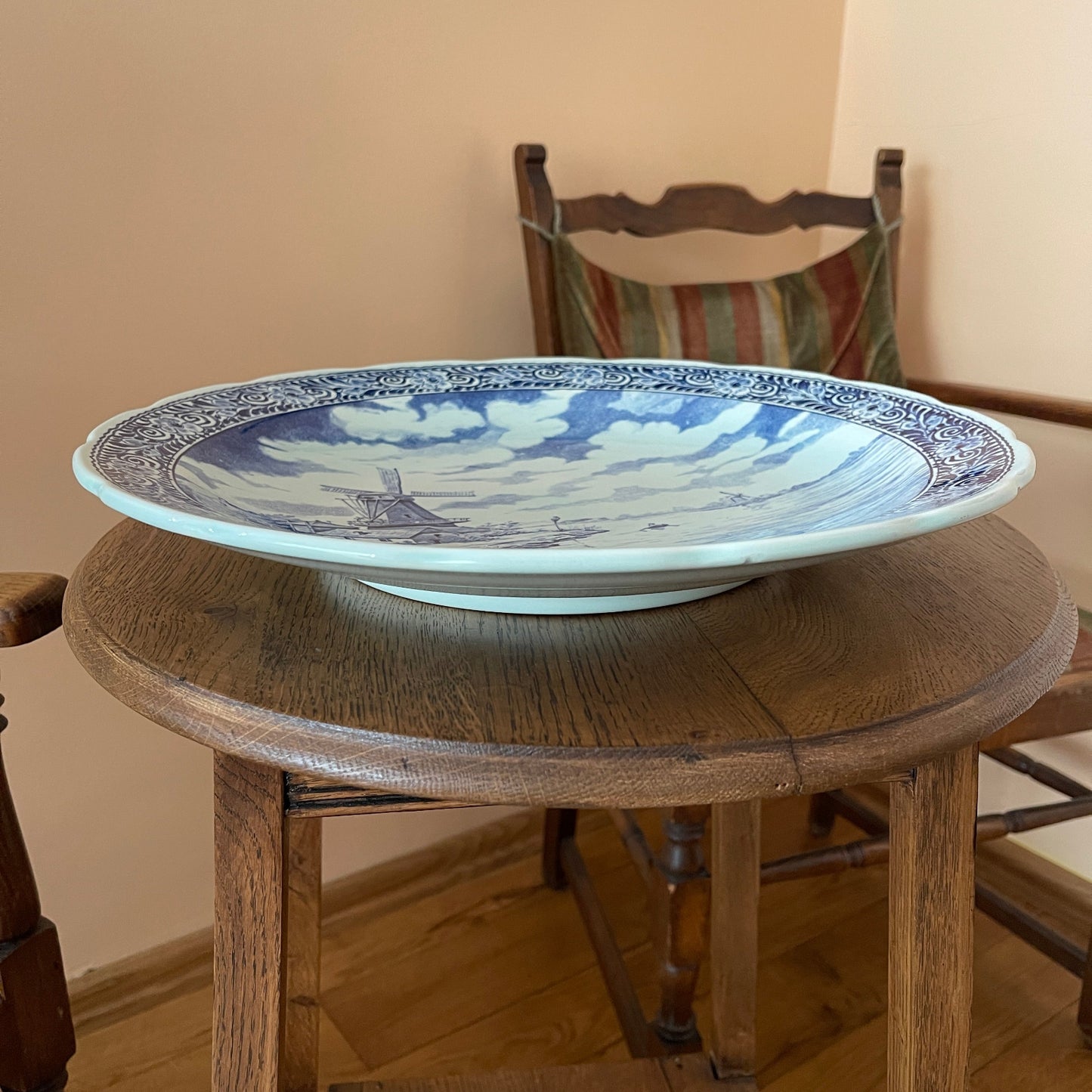
This impressive and oversized Delft Blue wall charger was crafted by the renowned Belgian manufacturer Boch (La Louvière) in the mid-20th century. The central scene features a serene, atmospheric riverside landscape with traditional windmills and cottages, framed by an intricate floral border.
The artwork is a faithful reproduction of a painting by Fredericus van Rossum du Chattel (1856–1917), a celebrated master of the Hague School, famous for his poetic depictions of the Dutch countryside. This large-scale piece showcases the timeless elegance of blue and white pottery and serves as a magnificent "statement piece" for any interior.
The charger is in excellent vintage condition, with no chips, cracks, or repairs. The reverse is equipped with pre-drilled holes, making it ready for immediate wall mounting.
Product details:
- Dimensions: Diameter 15 1/2" × Height 2"
- Technique: Delftware ceramic, underglaze white-blue decoration
- Origin: Belgium (Boch Frères)
- Date: Mid-20th century
- Signature: Stamped “Boch Belgium Delfts” on the base
-
Condition: Excellent vintage condition; no damage
Delft ceramics, also known as Delftware or Delft porcelain, is a type of hand-painted tin-glazed earthenware that has been produced since the 17th century in the Dutch city of Delft. Inspired by Chinese porcelain, it is characterized by a white tin glaze with decorations, most often in shades of blue (known as Delft Blue), depicting Dutch scenes, floral motifs, and biblical imagery. It was made in the form of plates, vases, tiles, and jugs. The most famous still-operating manufacturer is Royal Delft (De Porceleyne Fles). Delftware differs from true porcelain in its material (earthenware), hand-painted decoration, and often the presence of factory marks or date codes on the underside.
Boch Frères Keramis, founded in 1841 in La Louvière, Belgium, is one of the most renowned European producers of ceramics and earthenware. The company quickly gained international recognition for its high-quality decorative and functional pieces, including elegant tableware, tiles, and artistic vessels. It became especially famous for its Art Deco collections as well as designs inspired by traditional Delft Blue pottery, blending Belgian craftsmanship with Dutch design heritage. Today, Boch ceramics are highly sought after by collectors worldwide for their rich decoration, masterful execution, and significant role in the history of European design.
Frederick van Rossum du Chattel (1856–1917) was a Dutch painter associated with the Hague School. He specialized in romantic river and canal landscapes, often featuring windmills, boats, and pastoral scenes. His works are celebrated for their luminous depiction of water and light, and they have inspired many Delft-style ceramics produced in the 20th century.