Museum Quality 18th Century Antique Delft Blue and White Vase – De Grieksche A (The Greek A), Jan Teunis Dextra Period (1757–1765)
Museum Quality 18th Century Antique Delft Blue and White Vase – De Grieksche A (The Greek A), Jan Teunis Dextra Period (1757–1765)
Couldn't load pickup availability
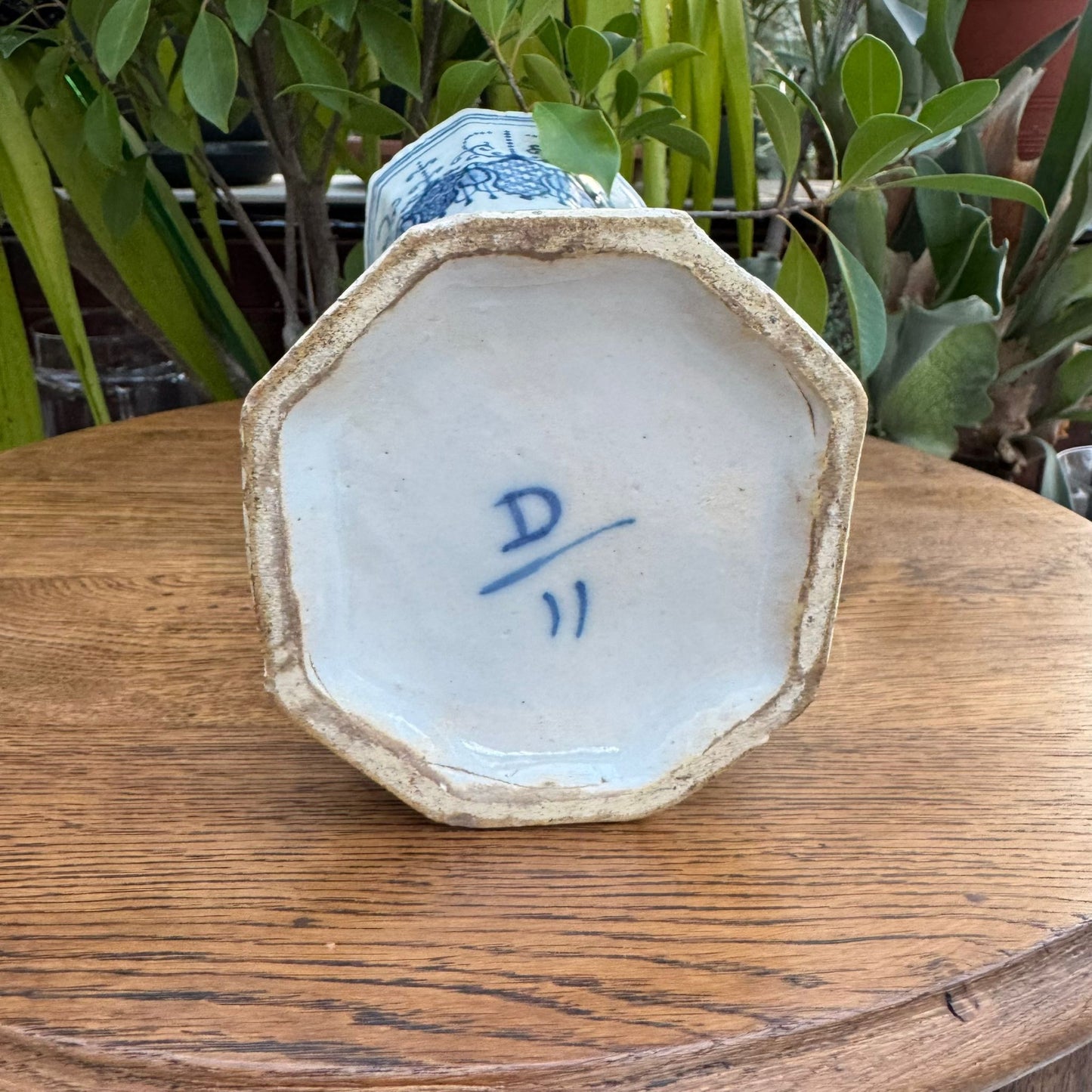
This rare and museum-quality blue and white Delftware vase is a premier example of 18th-century Dutch artistry. Produced by the legendary De Grieksche A (The Greek A) factory in Delft, this octagonal piece dates precisely to the prestigious ownership of Jan Teunis Dextra (1757–1765), as confirmed by the authentic underglaze monogram on the base.
The vase features masterful hand-painted decoration in a Chinoiserie-inspired floral style, showcasing the deep cobalt tones and luminous tin-glaze that made Dextra-period pieces world-famous. Its elegant octagonal form and sophisticated geometric motifs reflect the peak of 18th-century European ceramic production.
As expected for a 260-year-old earthenware piece, the vase shows historical wear consistent with its age. This includes characteristic fritting (small glaze losses) along the octagonal ribs and rim, as well as visible chips and aged professional restorations. These features verify its long history and are typical of authentic 18th-century tin-glazed pottery. Overall, it remains a highly stable and magnificent display piece for any serious collector.
Product details:
- Dimensions: Height: 12", Width: 6"
- Technique: Hand-painted blue and white ceramic (tin-glazed earthenware)
- Origin: De Grieksche A (The Greek A), Delft, Netherlands
- Date: Circa 1757-1765
- Signature: Authentic Dextra-period factory mark on the underside
- Condition: Antique condition with rim fritting, visible chips, and historical repairs (please refer to high-resolution photos for detail).
Founded in 1658 in the city of Delft, the De Grieksche A factory (translated as The Greek A) was one of the most renowned producers of Delftware – a distinctive form of Dutch tin-glazed earthenware. The factory earned its reputation for crafting elegant blue and white ceramics inspired by Chinese porcelain, as well as polychrome pieces decorated with rich motifs and European scenes. During the 18th century, the factory underwent a series of ownership changes, with one of its most notable periods under Jan Teunis Dextra, who ran the factory from 1757 to 1765. Items from this era are often marked with variations of a "D" monogram, sometimes accompanied by numerical codes or initials, as seen on the base of many authenticated pieces. Production at De Grieksche A was known for its fine detailing, balanced forms, and durable glazes. The factory remained in operation until 1811, leaving behind a legacy of masterfully crafted Delftware that remains highly sought after by collectors and museums today.
Delft ceramics, also known as Delftware or Delft porcelain, is a type of hand-painted tin-glazed earthenware that has been produced since the 17th century in the Dutch city of Delft. Inspired by Chinese porcelain, it is characterized by a white tin glaze with decorations, most often in shades of blue (known as Delft Blue), depicting Dutch scenes, floral motifs, and biblical imagery. It was made in the form of plates, vases, tiles, and jugs. The most famous still-operating manufacturer is Royal Delft (De Porceleyne Fles). Delftware differs from true porcelain in its material (earthenware), hand-painted decoration, and often the presence of factory marks or date codes on the underside.